
Surgery is a common treatment for kidney cancer that has not spread extensively beyond the kidney. Depending on the tumour and the patient’s health, the surgeon may remove only the tumour-bearing portion of the kidney or the entire affected kidney.
Dr. Parag Ingle discusses laparoscopic kidney cancer surgery in Nagpur after reviewing the tumour’s size, position, imaging characteristics and relationship with nearby blood vessels. Understanding how laparoscopic and open surgery differ can help patients have a more useful preoperative discussion.
The Main Surgical Options
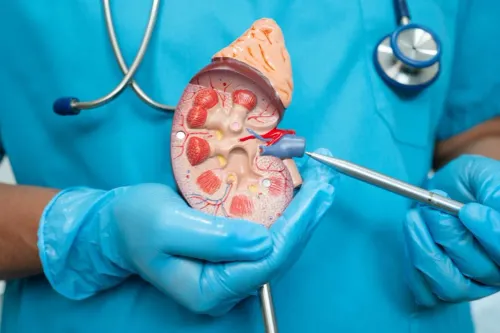
A partial nephrectomy removes the tumour along with a small margin while preserving the remaining kidney. It may be suitable for selected small or favourably located tumours.
A radical nephrectomy removes the entire kidney and may also include surrounding fatty tissue or nearby structures when medically necessary. This approach may be advised for larger, centrally located or more complex cancers.
Both partial and radical nephrectomy can be performed through laparoscopic or open surgery, depending on the case.
How Laparoscopic Surgery Is Performed
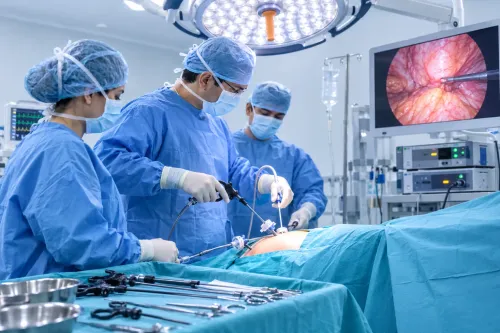
During laparoscopic surgery, the surgeon makes several small abdominal incisions. A camera and specialised instruments are inserted through these openings, allowing the operation to be viewed on a monitor.
The kidney tumour or affected kidney is separated carefully and removed through one of the incisions, which may need to be enlarged slightly for specimen extraction.
Potential advantages for appropriate patients include:
- Smaller incisions
- Reduced postoperative pain
- Less blood loss in many cases
- Shorter hospitalisation
- Earlier mobilisation
- Faster return to routine activities
These benefits vary according to the complexity of the operation and the patient’s medical condition.
When Open Surgery May Be Preferred
Open surgery uses a larger incision to provide direct access to the kidney and surrounding structures. It may be recommended when:
- The tumour is very large
- Major blood vessels are involved
- Cancer extends into the renal vein or inferior vena cava
- Nearby organs may require treatment
- The tumour’s position makes partial nephrectomy highly complex
- Previous operations have caused extensive internal scarring
- The surgeon anticipates difficult bleeding control
Open surgery is not an inferior choice when it provides safer and more complete tumour removal.
Cancer Control Comes First
Patients sometimes focus mainly on incision size and recovery time. However, the central objectives of kidney cancer surgery are complete tumour removal, preservation of kidney function where feasible and safe management of surrounding structures.
During partial nephrectomy, the surgeon must balance removal of the cancer with preservation of healthy kidney tissue. This can be technically demanding when the tumour is deep, close to blood vessels or near the kidney’s urine-collecting system.
Questions to Ask Before Choosing an Approach
Patients can ask:
- Is partial nephrectomy possible in my case?
- Why is laparoscopic or open surgery recommended?
- Could the operation change from partial to radical nephrectomy?
- Is there a possibility of converting laparoscopic surgery to open surgery?
- How will my kidney function be monitored?
- What complications should I understand?
- How long is the expected recovery?
A conversion to open surgery may occasionally be required for bleeding, difficult anatomy or unexpected tumour involvement. This is a safety measure and should be discussed beforehand.
For patients considering laparoscopic kidney cancer surgery in Nagpur, the most appropriate technique depends on cancer-related and patient-related factors. The best approach is the one that supports safe removal without compromising essential cancer surgery principles.
Keywords