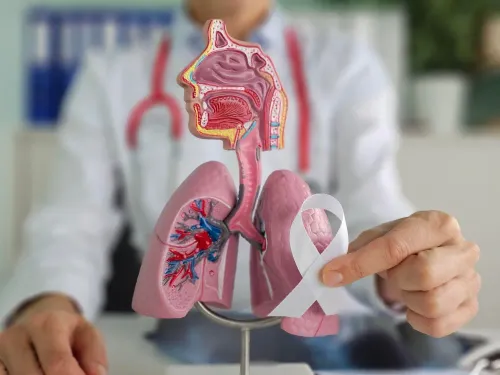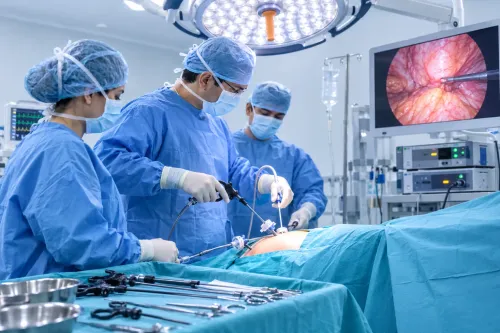
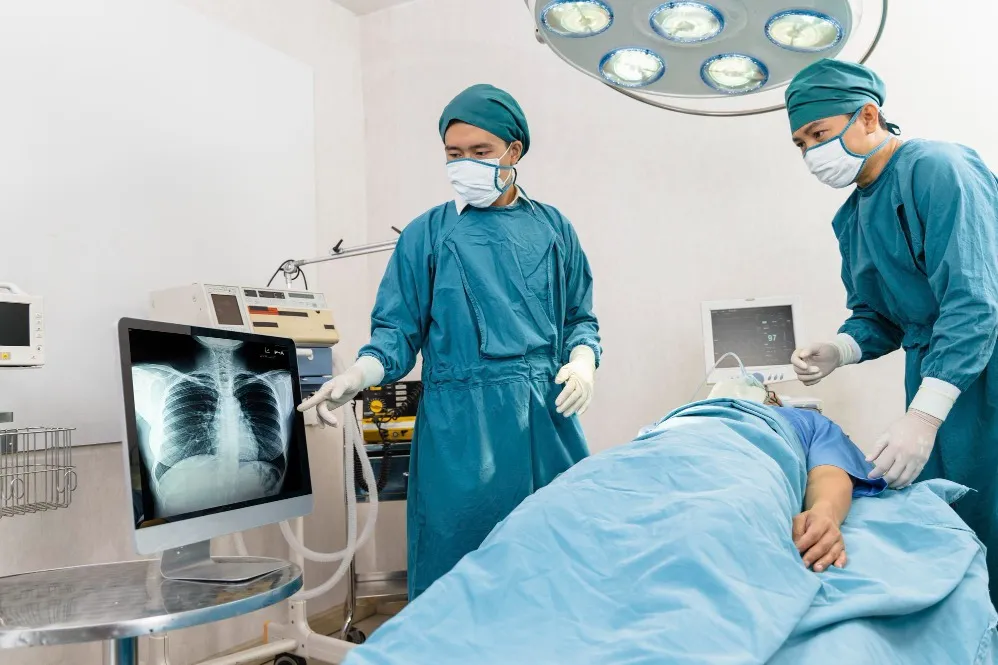
Surgery can be an important treatment for certain early-stage lung cancers, particularly when the tumour is confined to the lung and the patient is physically fit for an operation. Video-assisted thoracoscopic surgery, commonly called VATS, allows suitable lung tumours to be removed through smaller chest incisions than those used in traditional open surgery.
VATS is not the correct approach for every lung cancer. Its suitability depends on the cancer type, stage, tumour location, lung function and the patient’s overall condition.
What Is VATS Surgery?
During VATS, the surgeon inserts a thoracoscope—a narrow instrument with a camera—through a small incision between the ribs. The camera displays a magnified view of the chest cavity on a monitor. Additional small incisions allow specialised instruments to be introduced.
Unlike a conventional thoracotomy, VATS usually does not require one long incision with extensive spreading of the ribs. However, it remains a major cancer operation requiring general anaesthesia and careful postoperative monitoring.
Which Operations Can Be Performed?
The amount of lung removed depends on the tumour and its location.
Common procedures include:
- Wedge resection: Removal of the tumour with a small margin of surrounding lung
- Segmentectomy: Removal of an anatomical segment of a lung lobe
- Lobectomy: Removal of the complete lobe containing the tumour
- Lymph-node sampling or dissection: Removal of regional nodes for accurate staging
Lobectomy remains an established operation for many operable non-small cell lung cancers. In carefully selected patients with small early tumours, a segmentectomy or wedge resection may be considered.
The National Cancer Institute notes that lung-sparing surgery may be appropriate for certain people with early-stage non-small cell lung cancer, although the best operation must be selected individually. National Cancer Institute
Potential Advantages of VATS
When clinically appropriate and performed successfully, VATS may offer:
- Smaller surgical wounds
- Less postoperative discomfort
- Reduced blood loss
- Shorter hospitalisation
- Earlier mobilisation
- Faster return to routine activities
- Fewer wound-related difficulties
These advantages do not mean that VATS is a minor procedure. Complications such as bleeding, infection, air leakage, breathing difficulties, blood clots or heart rhythm changes can still occur.
Assessment Before Surgery
Patients generally need several investigations before lung cancer surgery:
- CT or PET-CT to assess disease extent
- Biopsy to confirm the cancer type
- Pulmonary function tests
- Blood tests and cardiac assessment
- Evaluation of chest lymph nodes when indicated
- Anaesthesia fitness assessment
Smoking cessation is strongly encouraged because it can improve lung function and reduce postoperative complications.
When VATS May Not Be Suitable
Open surgery may be preferable when the tumour is large, involves major blood vessels or central airways, or requires complex reconstruction. Dense internal scarring or unexpected bleeding may also require conversion from VATS to an open operation. Such conversion is a safety decision rather than a failed treatment.
Patients exploring lung cancer treatment with VATS surgery in Nagpur should receive a clear explanation of the planned lung resection, lymph-node evaluation and possibility of open surgery. Dr. Parag Ingle assesses imaging, biopsy findings and surgical fitness before considering a minimally invasive approach.
The main objective is complete and safe cancer removal. The size of the incision matters, but selecting the oncologically appropriate operation matters even more.
Keywords