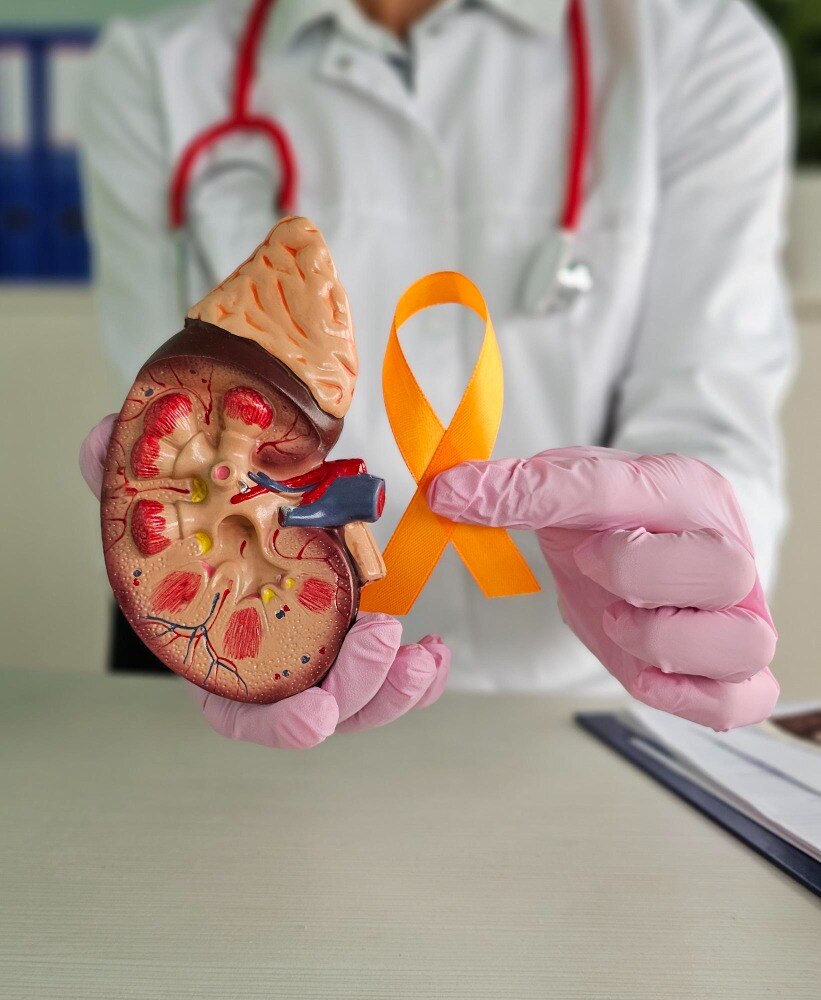
Surgery is often considered when a kidney tumor is confined to the kidney, but the decision depends on more than a scan showing a mass. Tumor size and location, kidney function, spread, other illnesses, and the likely benefits and risks of each treatment determine whether surgery, surveillance, ablation, or drug therapy is the better first step.
Key takeaways
- Surgery is strongest when imaging shows kidney cancer confined to the kidney.
- Tumor size, location, and existing kidney function shape the operation.
- Active surveillance or ablation may suit selected small kidney tumors.
- When cancer has spread, surgery is planned with other treatments.
When a kidney tumor is most likely to be treated with surgery
Kidney cancer surgery offers its strongest chance of removing all visible disease when imaging shows a tumor confined to the kidney and no spread to distant organs. This is localized kidney cancer, and removing the mass with an appropriate margin can be curative intent surgery.
You do not need pain, blood in the urine, or another symptom for surgery to be recommended. Many kidney tumors are found during scans performed for an unrelated problem. The decision rests on the scan findings, tumor position, your overall health, and whether the remaining kidney tissue can support normal function after treatment.
Surgery is also considered when a tumor has grown into nearby tissue but remains technically removable. The goal is complete removal, not simply reducing the tumor burden. If cancer has spread widely, removing the kidney usually does not remove all visible disease and immediate surgery can delay more useful systemic treatment.
A limited number of metastases can sometimes be removed when they are accessible and the rest of the disease is controlled or responds well to treatment. That is a different situation from routine treatment of localized disease.
For a small mass, active surveillance or ablation may avoid an operation, especially when surgery threatens kidney function. Surgery becomes more compelling when the mass grows, imaging strongly suggests an aggressive cancer, or complete removal is achievable with acceptable risk.
How tumor size, location, and kidney function determine the operation
Doctors choose partial nephrectomy when the tumor can be removed completely while leaving enough healthy kidney to work safely; they choose radical nephrectomy when preserving the kidney would create unacceptable surgical or cancer-control risks.
| Factor | Partial nephrectomy | Radical nephrectomy |
|---|---|---|
| Tumor size | Often suitable for a T1a kidney tumor, 4 cm or smaller; selected T1b kidney tumor, larger than 4 cm but no larger than 7 cm | More likely when the tumor is large, extensive, or cannot be removed with a clear margin |
| Tumor location | Favourable outer-kidney tumors that can be separated from major blood vessels and the urine-collecting system | Deep, central, hilar, or vessel-involving tumors where safe separation is unlikely |
| Kidney function | Strongly valuable when the other kidney is weak, or you have chronic kidney disease, diabetes, hypertension, or protein in urine | More acceptable when the opposite kidney works well and partial surgery would carry excessive risk |
| Technical risk | Preserves kidney tissue but can cause bleeding, urine leakage, or an incomplete margin | Removes the whole kidney and avoids the reconstruction required after a complex partial operation |
The surgeon weighs imaging against your estimated glomerular filtration rate, age, and the condition of both kidneys. A technically difficult partial nephrectomy is not automatically better: leaving cancer behind or causing serious complications can outweigh the benefit of preserved tissue.
A tumor extending into the renal vein or inferior vena cava requires specialist planning; nephrectomy with removal of the tumor thrombus may still be possible in selected patients.
When active surveillance or ablation may be safer than immediate surgery
A small kidney mass can be monitored or ablated instead of removed when its expected harm is lower than the risk of surgery, or when preserving kidney tissue is especially important.
Active surveillance is an accepted option for selected patients, particularly when the mass is smaller than 2 cm and imaging shows no aggressive features. It is also considered when you are older, have serious medical conditions, face high anesthesia risk, or have limited life expectancy.
The plan includes repeat imaging, measurement of growth, and treatment if the mass enlarges or develops concerning features.
- Active surveillance may suit a slow-growing mass in a patient with major competing health risks.
- It may suit a predominantly cystic Bosniak category 3 or 4 mass after specialist review.
- It may protect kidney function when tumors are bilateral, multiple, or linked to a hereditary kidney-cancer syndrome.
Thermal ablation treats the mass without removing the kidney. Cryoablation freezes the tumor, while radiofrequency ablation heats it. These procedures usually cause less blood loss and require a shorter recovery than partial nephrectomy, but they carry a higher risk that tumor remains or returns at the treatment site. Repeat treatment may be necessary.
A renal mass biopsy is recommended before or during ablation because the tissue diagnosis can change treatment. Biopsy is also useful when imaging is uncertain or active surveillance is under consideration. If imaging strongly indicates a removable kidney cancer and the result would not change the plan, doctors may proceed directly to surgery.
How surgery fits into treatment when kidney cancer has spread
Surgery is considered for locally advanced kidney cancer when the primary tumor can be removed safely and the patient can tolerate a major operation, particularly when there is no unresectable distant disease. A renal vein tumor thrombus or extension into the inferior vena cava does not automatically rule out surgery.
Nephrectomy with removal of the thrombus depends on its level, nearby organ involvement, other disease, and multidisciplinary planning.
For metastatic kidney cancer, removing the kidney is selective rather than automatic. Many patients start immunotherapy-based or targeted systemic treatment, then surgery is reconsidered if the cancer responds or remains limited, symptoms come from the primary tumor, and overall fitness is good. Immediate cytoreductive nephrectomy can harm patients unlikely to gain meaningful benefit.
Metastasis-directed surgery is reserved for carefully selected patients with technically removable disease, especially when complete removal is possible or a metastasis is causing symptoms. Widespread disease is treated primarily with systemic therapy; surgery is not a substitute.
Doctors weigh:
- Whether the kidney tumor and metastases can be completely removed
- The number, locations, and growth of metastases
- Response to systemic treatment
- Bleeding, pain, obstruction, or other tumor-related symptoms
- Heart, lung, and kidney function
- Recovery capacity and the patient’s treatment goals
What nearby tissues, lymph nodes, and future kidney health add to the decision
A tumor that reaches the renal vein, inferior vena cava, surrounding fat, adrenal gland, or nearby organs changes the operation’s extent and potential risks. Imaging should also check for enlarged or suspicious lymph nodes and distant disease; an abnormal node does not automatically mean every node must be removed.
Before recommending surgery, review these specific findings:
1. Lymph nodes: If scans show no nodal involvement, routine lymph-node dissection has no proven benefit for most patients. Remove suspicious or involved nodes when their findings could affect staging or treatment.
2. Adrenal gland: Do not add an adrenalectomy automatically. Consider it when the tumor directly invades the gland, imaging shows adrenal involvement, or another finding makes removal necessary.
3. Remaining kidney: Confirm how well the opposite kidney works. A solitary kidney, chronic kidney disease, reduced estimated glomerular filtration rate, or protein in the urine increases the value of preserving functioning tissue through partial nephrectomy when technically possible.
4. Future kidney risk: Factor in age, diabetes, hypertension, baseline kidney function, and the amount of kidney tissue the surgeon can save. Removing a kidney can create long-term kidney disease even when the operation removes all visible cancer.
5. Treatment context: For metastatic disease, assess symptoms, performance status, treatment response, and whether all removable disease can be addressed. Surgery is selective, not an automatic first step.
Dr.Parag Ingle - Surgical Oncologist can help you review these imaging, pathology, and kidney-function findings together before choosing an operation.
Related services
Surgery for cancer We are dedicated to provide advanced and compassionate care. Our skilled and experienced surgical team employs state-of-the-art techniques to remove... View service → |
Cancer is a disease that causes abnormal growth of cells in the body. It can affect any part of the body and can spread to other organs. View service → |
Frequently asked questions
When is surgery most likely to treat kidney cancer?
Surgery is most likely when imaging shows the tumor is confined to the kidney, with no distant spread. Removing the tumor with an appropriate margin can aim to cure localized disease.
How do tumor size and location affect kidney cancer surgery?
Size and location determine whether surgeons can remove only the tumor while preserving healthy kidney tissue or need to remove the entire kidney. The tumor’s position near blood vessels, the urine-collecting system, or other structures also affects the operation.
When might active surveillance or ablation be safer than immediate surgery?
Active surveillance or ablation may be considered for selected small tumors, particularly when surgery carries higher risks because of age, other health conditions, or limited kidney function.
How does surgery fit into treatment when kidney cancer has spread?
When kidney cancer has spread, surgery may be combined with systemic treatments or used selectively to control the primary tumor or symptoms. The plan depends on the sites and extent of spread.
Related service
Oral cancer treatment involves various medical procedures to address cancerous growth in the mouth. View service → |