
A breast cancer diagnosis can bring many unfamiliar medical terms and difficult decisions. Understanding how the disease is assessed and treated helps patients participate more confidently in discussions with their oncology team.
Breast cancer treatment is not identical for every patient. Doctors develop an individual plan after studying the tumour type, stage, hormone receptor status, HER2 status, general health and personal preferences.
How Breast Cancer Is Diagnosed
Evaluation often begins after a breast lump, nipple change or abnormality on a mammogram or ultrasound is identified. However, not every breast lump is cancerous.
The diagnostic process may include:
- Clinical breast examination
- Mammography or breast ultrasound
- Breast MRI in selected situations
- Core needle biopsy
- Hormone receptor and HER2 testing
- Imaging to determine whether cancer has spread
A biopsy is essential because imaging alone cannot confirm breast cancer. The tissue report identifies the type and biological characteristics of the tumour, which directly influence treatment.
Why Staging Matters
Breast cancer staging describes the size of the tumour, lymph-node involvement and whether the disease has reached distant organs. Stages generally range from stage 0 to stage IV.
Early-stage cancer is usually confined to the breast or nearby lymph nodes. Locally advanced disease may involve more breast tissue, skin, chest-wall structures or regional nodes. Metastatic breast cancer has spread to another part of the body.
Treatment decisions depend on more than the stage. Two patients with similarly sized tumours may receive different therapies because their cancers have different receptor profiles.
Common Breast Cancer Treatment Options
Surgery
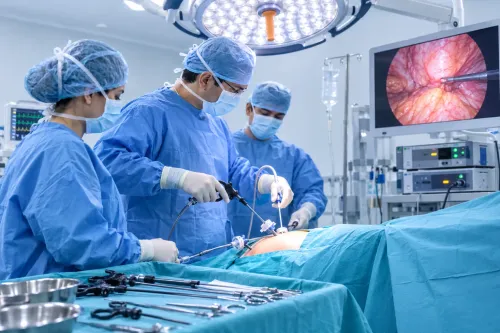
Surgery is frequently part of treatment for non-metastatic breast cancer. Depending on tumour size and location, the operation may involve breast conservation surgery or mastectomy.
Breast conservation surgery removes the tumour with a surrounding margin of healthy tissue while preserving most of the breast. Mastectomy removes the breast tissue and may be advised when the tumour is extensive, occurs in multiple areas or cannot be removed adequately through conservation surgery.
According to the National Cancer Institute, lumpectomy and mastectomy are the two principal surgical approaches used for breast cancer. National Cancer Institute
Radiation Therapy
Radiation uses controlled high-energy beams to destroy remaining cancer cells in a targeted area. It is commonly advised after breast conservation surgery and may also be needed after mastectomy in certain cases.
Systemic Treatment
Systemic treatments work throughout the body and may include:
- Chemotherapy
- Hormone therapy
- HER2-targeted treatment
- Immunotherapy in selected cancers
- Other targeted medicines based on tumour biomarkers
Treatment may be given before surgery to shrink a tumour or after surgery to reduce the risk of recurrence.
Questions Patients Can Ask
Before beginning treatment, patients may ask:
- What is the exact type and stage of my cancer?
- What do the receptor test results mean?
- Is breast conservation medically suitable?
- Will treatment be needed before surgery?
- Should lymph nodes be evaluated?
- What side effects and recovery period should I expect?
- Will treatment affect fertility or cause early menopause?
Patients seeking breast cancer treatment in Nagpur can benefit from a coordinated assessment involving surgical oncology, medical oncology, radiation oncology, pathology and radiology. Dr. Parag Ingle considers the tumour’s clinical and pathological findings when discussing surgical treatment possibilities.
A clear treatment plan should explain the purpose and sequence of every recommended therapy. When patients understand why a particular approach has been suggested, the treatment journey becomes more organised and less overwhelming.
Keywords