
Colon cancer and rectal cancer are often grouped under the term colorectal cancer, but their treatment pathways are not always the same. The colon occupies most of the large intestine, while the rectum is its final section before the anus. Their different positions influence how surgery is planned and whether treatment is required before the operation.
Understanding these differences can help patients interpret their reports and prepare meaningful questions for the surgical consultation.
How Colorectal Cancer Is Confirmed
Symptoms may include blood in the stool, persistent changes in bowel habits, abdominal discomfort, unexplained weight loss, tiredness or iron-deficiency anaemia. Some cancers are detected during screening before symptoms appear.
Diagnosis and staging may involve:
- Colonoscopy
- Biopsy of the abnormal growth
- CT scans of the chest, abdomen and pelvis
- MRI of the pelvis for rectal cancer
- Carcinoembryonic antigen blood test
- Additional scans in selected cases
The biopsy confirms the cancer type, while imaging helps determine whether it has reached lymph nodes or distant organs.
What Happens During Colon Cancer Surgery?
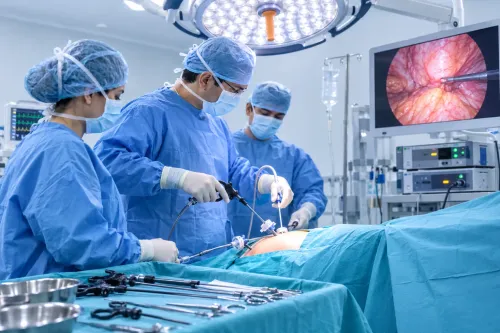
For localised colon cancer, surgery usually removes the affected portion of the colon along with its blood supply, surrounding tissue and regional lymph nodes. The healthy bowel ends are then joined, a process known as an anastomosis.
The operation performed depends on the tumour’s location. Examples include right hemicolectomy, left hemicolectomy and sigmoid colectomy.
Surgery may be completed through an open incision or with a minimally invasive laparoscopic technique. The choice depends on the tumour, previous operations, patient fitness and surgical complexity.
The National Cancer Institute describes surgical removal of the primary tumour and regional lymph nodes as a standard treatment for localised colon cancer. National Cancer Institute
How Rectal Cancer Treatment Can Differ
Rectal cancer develops within the pelvis, close to the bladder, reproductive organs, pelvic nerves and anal sphincter. This makes surgical planning particularly important.
Some patients receive chemotherapy, radiation or both before rectal cancer surgery. Preoperative treatment may shrink the tumour, address microscopic disease and improve the possibility of complete removal.
Operations may include:
- Local excision for carefully selected early tumours
- Low anterior resection
- Abdominoperineal resection
- Total mesorectal excision as part of radical rectal surgery
Where medically appropriate, treatment planning may aim to preserve the anal sphincter. This is not always possible when a tumour is very low or directly involves the sphincter muscles.
Is a Stoma Always Permanent?
A stoma creates an opening on the abdomen through which stool passes into a collection bag. It may be temporary or permanent.
A temporary ileostomy is sometimes created to protect a low bowel connection while it heals. It may be reversed after recovery if healing is satisfactory. A permanent colostomy may be required when the anus and sphincter must be removed or when a safe bowel connection cannot be made.
Patients should ask whether a stoma is expected, why it may be necessary and whether reversal is likely.
Preparing for Surgery in Nagpur
Preoperative preparation may include nutritional assessment, correction of anaemia, bowel preparation when prescribed, medication review and management of diabetes or heart conditions. Patients should also understand expected hospitalisation, pain control, diet progression and activity restrictions.
Dr. Parag Ingle reviews tumour location, staging scans and biopsy findings when discussing colon and rectal cancer surgery in Nagpur. A multidisciplinary plan may also involve medical and radiation oncologists, particularly for rectal or advanced disease.
The safest treatment plan is based on accurate staging and tumour location—not on a single standard operation for every colorectal cancer patient.
Keywords